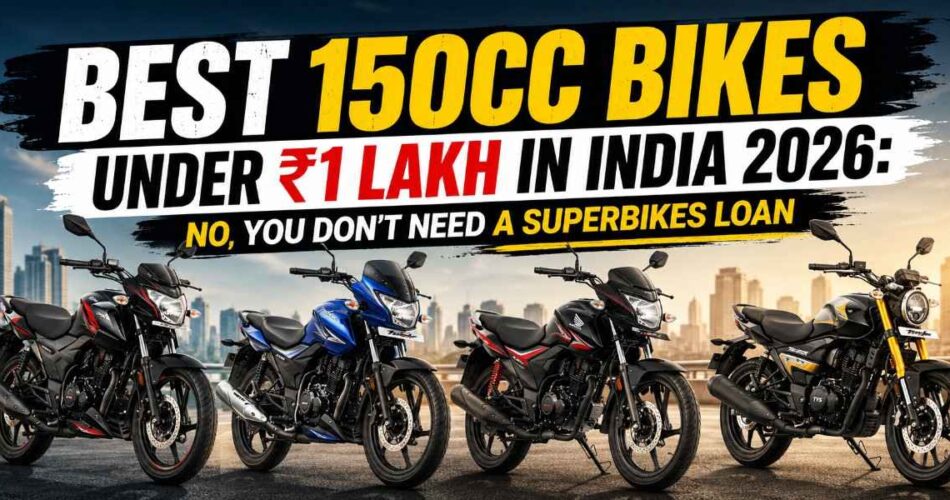
You know how this goes.
You start by searching “best 150cc bikes under 1 lakh” and five minutes later you’re watching a guy in riding gloves explain compression ratios in 4K.
Meanwhile, your actual life situation is a lot simpler. You want a bike that looks decent in front of the office gate, doesn’t cry at 80 kmph, and doesn’t make you calculate EMI + petrol + service like a mini home loan. But the 2026 market has done that typical Indian thing: too many options that look similar, sound similar, and are priced just outside your budget.
This site sits in that overlap of tech and real life. You’re probably reading this on your phone, juggling between WhatsApp, UPI, and bike reviews. I’m not going to sell you “the most powerful 150cc monster.” I’m going to help you pick the bike that won’t feel like a financial mistake three months after delivery.
THE THING NOBODY ACTUALLY SAYS OUT LOUD
Nobody is buying a 150cc bike under ₹1 lakh in 2026 because they carefully read the spec sheet line by line. They’re buying what their friends talk about, what the local mechanic nods at, and what the bank / EMI calculator doesn’t scream about.
Here’s the awkward truth: in 2026, very few proper 150–160cc bikes actually sit under ₹1 lakh on-road in big cities. Most popular options like Pulsar 150, Apache RTR 160 4V, Yamaha FZ series float around or above that bracket once you add RTO and insurance. So when people say “150cc under 1 lakh,” what they often mean is “as close to 1 lakh as possible without making my parents ask too many questions.”
The other thing nobody says: most people use a 150cc bike like a slightly overqualified commuter, not as a sports machine. You’re not corner-carving on the daily. You’re doing office runs, metro station runs, tuition runs, weekend city spins. On those runs, what actually changes your life isn’t peak bhp. It’s how calm the bike feels at 60–80 kmph, how often you stop for fuel, and whether your lower back files a complaint.
Look at the segment right now. Bikes like Bajaj Pulsar 150, TVS Apache RTR 160 4V, Yamaha FZS, Honda Unicorn/XR-type options and upcoming 150-ish cc models sit in that “I want more than 125cc, but I don’t want to go full sports” space. They’re built for exactly the guy scrolling this article: someone who wants a bike that looks grown-up, can handle city plus some highway, and doesn’t drink fuel like a 250.
The pop-culture version of this is simple: this is the “middle-class superhero” segment. You’re not Batman with a superbike. You’re the guy who has to park next to Activas, but still wants to feel a little cool leaving the office basement. You want an upgrade from Splendor, not an identity crisis.
And here’s the real kicker: the difference between a “fun” 150 and a “sensible” 150 isn’t just engine numbers. It’s how much mental load the bike adds. Constant gear shifts, hard seat, peaky powerband? Looks great on Sunday breakfast rides. Gets old really fast on Tuesday evening in bumper-to-bumper traffic.
HOW THIS ACTUALLY WORKS THE REAL MECHANICS
Let’s strip the romance out of it for a second. A 150–160cc bike in India in 2026 is a compromise triangle between:
- Price (you’re aiming under or around ₹1 lakh ex-showroom),
- Performance (you want “proper bike” feel, not just big-bore commuter),
- Running cost (fuel + service that doesn’t need a password-protected Excel sheet).
Now, the boring-but-useful context.
Most mainstream “150cc” options now stretch into 160cc territory: Pulsar 150 still exists, but a lot of the limelight has shifted to bikes like Pulsar N160, Apache RTR 160 4V, Yamaha FZ twins, Hero Xtreme 160R, Suzuki Gixxer and so on. Their typical ex-showroom pricing ranges from roughly ₹1.1 lakh to ₹1.3+ lakh, depending on variant and city. That means if you want to stay strictly under ₹1 lakh, your realistic picks are usually:
- Discounted / base variants in smaller cities,
- Slightly older 150 platforms like Pulsar 150,
- Or “edge of 1 lakh” deals in tier-2/3 locations where on-road can still flirt near your cap.
That’s the niche we’re sitting in: value-focused 150–160cc bikes that feel like an upgrade from 125cc, without going into “why is this almost 1.5 lakh?” territory.
What matters beyond the brochure:
- Power vs city comfort: Apache RTR 160 4V and Pulsar 150 are classic rivals; Apache makes more power (around 16 PS vs Pulsar’s 14 PS) and feels sharper, while Pulsar feels more relaxed and familiar in its tuning.
- Mileage reality: Most 150/160s in this zone hover around 45–50 kmpl when ridden decently, with Pulsar 150 and Apache 160 both tested around 47–47.5 kmpl in many reviews.
- Feel factor: Yamaha FZ and FZS often win on “planted” feel and handling, but you usually pay more, creeping above the 1 lakh line in many markets.
The niche angle nobody really talks about: 150cc bikes as the “one bike for everything” for phone-first riders. You’re not just riding you’re using maps, plugging in calls on the go, maybe even mounting your phone on the handle. A slightly heavier, more stable 150 at 70–80 kmph with decent brakes is a huge upgrade if you often ride with navigation running.
Let’s put some concrete options on the table in this value-focused 150–160-ish band:
- Bajaj Pulsar 150: Old but still relevant, ex-showroom pricing in many cities just above ₹1.1 lakh, on-road early 1.3 range, with roughly 47.5 kmpl claimed/realistic mileage in mixed use.
- TVS Apache RTR 160 (non–4V and 4V): Sportier ergonomics and more power, real-world mileage often similar to Pulsar (~47 kmpl), but typically a bit pricier depending on variant.
- Yamaha FZ / FZS FI: Known for stability and handling, often sitting higher in price with around 45–50 kmpl real-world; many variants cross ₹1.2–1.3 lakh ex-showroom.
- Hero Xtreme 160R (and similar): Attempts to give good performance plus reasonable efficiency, usually priced in that mid 1.2+ lakh ex-showroom region.
Short list with opinion attached:
- Pulsar 150: Still the safest “my first 150” in many cities, especially where Bajaj service is strong.
- Apache RTR 160 4V: Buy this if you care about how a bike feels when pushed, not just how it looks.
- Yamaha FZ/FZS: Great if handling and brand image matter more to you than squeezing every rupee.
- Value 160 options (Xtreme 160R etc.): Good middle ground if pricing and offers in your city pull them close to 1 lakh ex-showroom.
COMPARISON WHAT’S ACTUALLY DIFFERENT BETWEEN YOUR OPTIONS
Core 150–160cc picks (value-focused)
| Option | What it actually does | Who it’s for | The catch |
| Bajaj Pulsar 150 | Classic 150 with around 14 PS, ~47.5 kmpl mileage, familiar feel. | First-time 150 buyers who want a known name and easy spares. | Platform is old, design feels familiar everywhere, not the sharpest handler. |
| TVS Apache RTR 160 4V | Sharper, more powerful (~16 PS) with similar ~47 kmpl mileage. | Riders who enjoy spirited riding and cornering confidence. | Slightly aggressive riding posture, typically pricier than Pulsar 150. |
| Yamaha FZ / FZS FI | Stable, planted feel, strong low-end, ~45–50 kmpl real-world. | Those who prioritize handling and brand image. | Usually above ₹1 lakh comfortably, fewer variants are truly “budget.” |
| Hero Xtreme 160R-type | Tries to balance city performance and decent mileage. | Buyers want something fresher than Pulsar but still usable. | Availability, pricing and offers vary a lot by city. |
| Budget 150 newcomers | Upcoming 150s positioned near 1.05–1.15 lakh ex-showroom. | Value hunters are okay with less “heritage” but good numbers. | New platforms mean unknown long-term reliability and resale. |
If you want one clear call: for most riders who care about value, Pulsar 150 remains the most “safe plus fun enough” 150 , while Apache 160 is the pick if you know you enjoy spirited rides and don’t mind a slightly sportier stance. Yamaha FZ/FZS are for those willing to pay more for that planted feel and badge.
ALSO READ: Dirt Bike Price in India 2025: Top Models, Features, and Full Price List
WHAT ACTUALLY HAPPENS WHEN YOU TRY THIS
When you actually live with a 150-160cc bike, the spec sheet turns into muscle memory very fast.
First week, you’re hyper-aware of the power jump if you’re coming from a 100-125cc bike. The bike feels “big,” the exhaust note sounds serious, and you keep finding excuses to take slightly longer routes. On a Pulsar 150, the extra torque just makes everything lazier you upshift earlier, ride more in third and fourth, and the bike feels like it’s barely trying at city speeds. On an Apache 160 4V, the engine feels more eager; you’ll want to rev it a bit more just because the response feels good.
What surprised me the first time I started using a 150 properly for city + small highway runs was how often I stayed below 80 kmph anyway. You think you’ll be regularly “cruising at 100,” but traffic, road quality, random speed breakers and “surprise” dogs keep you grounded. The value of a 150 then becomes less about top speed and more about how calm the bike feels at 60-75 with a pillion and some luggage.
There’s one pattern most glossy reviews don’t talk about: the second year reality. Once the new-bike glow fades, you stop obsessing about power and start noticing:
- How often you’re stopping for fuel. With bikes like Pulsar 150 and Apache 160 usually delivering around 45–50 kmpl, you’ll feel the difference if you’re used to a 60+ kmpl commuter.
- How your wrists and back feel in slow traffic. A slightly sporty stance can feel great on open stretches but a bit tiring in bumper-to-bumper riding if you commute long distances daily.
- How your brain reacts when the service reminder shows up. Big bill = sudden regret; boring, predictable bill = quiet satisfaction.
Also, when you actually take these bikes out on the occasional longer run 70–150 km weekend rides the extra cubic capacity finally makes sense. Overtakes are less stressful. Wind blasts feel a bit more manageable because you’re not wringing the throttle just to hold 80. That’s where the Apache’s extra poke over a Pulsar is noticeable and where Yamaha’s FZ stability starts to feel worth the price.
What nobody warns you about: the “parking lot effect.” Once your 150 is a regular in the office or college lot, it stops being a hero moment every day. It becomes part of your routine. That’s when it hits you whether you picked based on real use or just YouTube hype. If you still feel good about it when you’re starting it in the rain with a backpack and low energy, that’s the real win. If you look at the fuel gauge and quietly swear… less of a win.
ALSO READ: Best 125cc Bikes in India 2026: The Ones That Actually Make Sense
THE ADVICE EVERYONE GIVES VS WHAT ACTUALLY WORKS
- “If you’re buying 150cc, forget mileage go full performance.”
This sounds cool, usually from someone who doesn’t actually pay their own petrol bill. In reality, a 150–160 that gives around 45–50 kmpl vs one that sits around 35–40 kmpl makes a huge difference over 2–3 years if you ride daily. For most Indian riders, fuel cost and EMI live in the same mental bucket. The grounded approach: aim for a bike like Pulsar 150, Apache 160, or FZ that balances usable performance with near-commuter mileage, instead of chasing peak bhp. - “Always stretch your budget, you’ll regret a cheaper bike later.”
This is half-true at best. Yes, going from a struggling 125 to a solid 150 can change your highway comfort. But stretching from a sensible Pulsar 150 to a much pricier 200+ cc just because “you’re already spending so much” can wreck your running cost and insurance budget. Better strategy: set a hard cap including on-road, gear, and first-year fuel estimate, then choose the best within that , not “one more EMI slab above.” - “Yamaha/TvS/Brand X is best, just buy that blindly.”
Brand loyalty is cute until your nearest service center treats you like a walk-in wallet. Real-world satisfaction in 150-160cc depends heavily on local service quality and parts availability, which can vary city by city. In some towns, Bajaj is king. In others, TVS or Hero dominates. The realistic alternative: decide on 2–3 models you like, then check how strong their service network and reviews are in your actual area before locking in. - “If you’re mostly in city, 150 is overkill stick to 125.”
Sometimes true, often lazy advice. If your city runs are very short (under 10 km one way), a good 125 definitely makes sense. But if you do 15–30 km one way with flyovers, mixed traffic, and occasional ring-road stretches, a 150/160 can make the ride calmer and safer with barely any extra fuel burn if you drive sane. The better question is: how often do you ride with a pillion, how fast do you actually ride, and how bad are your roads?
The pattern here: popular advice is either emotionally charged (“go big or go home”) or brand worship. What works is boring: numbers, your route, your budget, and your tolerance for service-center drama.
THE PRACTICAL PART WHAT TO ACTUALLY DO
- Lock your total budget, not just ex-showroom.
Under ₹1 lakh ex-showroom sounds nice, but on-road usually climbs by 15–25% with RTO, insurance, and extras. Before even looking at models, decide your absolute max on-road number and how much you’re okay paying monthly if you go EMI. This stops you falling in love with a bike that will quietly squeeze something else in your life. - Map your real ride pattern for one week.
Use your phone to track distance: home-office, tuition, gym, weekend outings. If you’re under 10–12 km one way, a 125 might actually be enough. If you’re in the 15–30 km band with some open stretches, a 150–160 starts to earn its keep, especially two-up. That difference matters more than any brochure claims. - Shortlist exactly three bikes: boring, balanced, fun.
For example: Pulsar 150 as the “boring safe,” Apache 160 as “balanced but sporty,” and maybe a Yamaha FZ or Xtreme 160R as the “fun” or feel-good option. This structure keeps your brain from trying to compare eight nearly identical bikes at once. You’re picking a personality, not just a machine. - Test ride them in bad conditions , not just on the clean showroom loop.
Take each bike into the type of traffic and road that annoys you the most: slow jams, broken tarmac, speed breakers, narrow cuts. Notice: low-speed smoothness, clutch feel, brake bite, and how confident you feel doing a quick overtake. The bike that makes that scenario least stressful is secretly your best choice. - Talk to at least two existing owners in your city.
Owners are more honest than review videos once the camera is off. Ask them about real mileage, service bills, any repeating issues, and how the bike feels after 1–2 years. For Pulsar 150 and Apache 160 especially, you’ll find plenty of people willing to summarize their relationship in one sentence listen to that sentence carefully. - Check service center ratings and parts availability online.
A great bike plus a bad service center turns into a headache fast. Spend 10 minutes checking reviews of the nearest authorized workshops for your shortlisted brands and, if you live in a smaller town, ask your local mechanic what he sees more often without disaster. Parts availability is a big reason Pulsar 150 and Apache-type bikes have aged well in India. - Decide your “non-negotiables” before signing anything.
For some, rear disc is mandatory. For others, single-channel ABS and at least a semi-digital console are must-haves. Maybe you want a specific color because your brain will complain every day otherwise. Write these down before the final visit. That list will protect you from “sir bas 5k extra and you get this variant” traps that don’t actually match your needs.
QUESTIONS PEOPLE ACTUALLY ASK
which is the best 150cc bike under 1 lakh in india 2026
If you’re talking near-150–160cc class and value for money, Bajaj Pulsar 150 is still one of the strongest picks where its ex-showroom hovers around the lower side of the 150 segment and on-road can remain close to your budget in some cities. It offers around 14 PS of power and real-world mileage in the 45–50 kmpl range when ridden sensibly. TVS Apache RTR 160 (especially the 4V) is a better choice if you prioritize sharper performance and handling over saving a bit on price. If your city prices push all of these well beyond 1 lakh on-road, consider whether a strong 125 like SP 125 or Raider makes more sense financially.
which 150cc bike gives best mileage and low maintenance
Traditional 150s like Bajaj Pulsar 150 and some budget-oriented 150/160 models often sit around the 45–50 kmpl real-world mark for mixed city riding. Pulsar 150, in particular, has a long track record of easily available parts and independent mechanics who know it inside out, keeping maintenance predictable. Some newer 160s are tuned for efficiency as well, but their long-term maintenance pattern is still building. If your first filter is mileage plus low upkeep, Pulsar 150 is a very safe starting point to test ride.
bajaj pulsar 150 vs tvs apache 160 which is better for daily use
Pulsar 150 is usually the calmer, more familiar-feeling bike in slow traffic, with a neutral riding position and a long history as a daily commuter with extra punch. Apache RTR 160 4V, on the other hand, offers more power and sportier dynamics, which feel great if you enjoy riding quickly or have open stretches on your route. Both return similar real-world mileage around 47–48 kmpl when not abused. For pure daily office runs in busy traffic, Pulsar usually feels less demanding; for someone who cares about ride feel and fun, Apache wins.
is 150cc bike good for daily commute in indian traffic
Yes, a 150–160cc bike can be very good for daily commutes, especially if your one-way distance is 10–30 km and you deal with flyovers or short highway sections. The extra torque makes overtakes and inclines feel easier, and the bike feels less stressed at 60-70 kmph than a smaller commuter. Fuel consumption will be higher than a 100–110cc, but many 150s still manage around 45–50 kmpl, which is manageable for a lot of riders. If your commute is extremely short and fully congested, a 125 might be more sensible.
which 150cc bike is best for beginners in india
For beginners stepping up from nothing or from a scooter, Bajaj Pulsar 150 is often recommended because of its predictable power delivery, comfortable stance, and widespread service support. It doesn’t feel too aggressive but still gives that “real bike” upgrade. Apache 160 can also work, but its slightly sharper response and sportier setup may feel a bit more demanding to someone completely new. Whatever you pick, starting with a test ride in slow traffic and practicing basic braking and low-speed control is more important than the logo on the tank.
which 150cc bike is best for city and occasional highway rides
For a mix of city and occasional highway runs, Apache RTR 160 4V and Yamaha FZ/FZS tend to stand out. Apache gives strong performance and feels lively for overtakes and short bursts, while FZ/FZS offer very planted highway manners and comfortable ergonomics. Pulsar 150 sits right behind them as a more budget-conscious all-rounder with enough power for 80–90 kmph cruising when needed. Your choice should come down to what feels more natural in your test ride and what your city pricing does to each option.
can i tour on a 150cc bike in india
You can absolutely tour on a 150-160cc bike if you accept its limits. Many riders in India have done long trips on Pulsar 150s, Apaches, and FZs by riding in the 70–90 kmph band rather than chasing top speed. The key is setting up a comfortable seat, using a good helmet, planning fuel stops, and not overloading the bike with luggage. If your touring is occasional and your main use is still daily commute, a 150cc is often the most sensible “do-it-all” compromise.
are there any 150cc bikes under 1 lakh on-road in 2026
In many big cities, most mainstream 150-160cc bikes cross 1 lakh on-road comfortably thanks to rising ex-showroom prices plus taxes and insurance. However, in some locations, base variants or discounts on bikes like Pulsar 150 can bring the on-road price close to that mark. Expect more “around 1.15–1.3 lakh” than true under-1-lakh deals in 2026, so you may need to adjust expectations or look at strong 125s if your limit is strict.
SO WHERE DOES THIS LEAVE YOU?
You’re basically trying to buy a “do-everything” bike in a segment that keeps trying to climb upmarket. The industry wants you to feel poor for stopping at 150–160cc. Your wallet knows better.
If your budget is tight and you still want a proper 150 feel, Pulsar 150 remains the obvious default: familiar, reasonably efficient, widely supported. If your roads and riding style reward a more engaging machine, Apache 160 or Yamaha FZ-type bikes make your weekday rides less dull, at the cost of slightly higher initial spend. You’re not picking the “best bike in India.” You’re picking the best compromise for your route, your fuel bill, and your patience.
One concrete thing you can do today: open your maps app, mark your daily route, count your total weekly kilometers and the worst traffic segments, then write down three bikes one safe (Pulsar 150), one sporty (Apache 160/FZ), one backup 125 if prices go insane. Once they’re on paper with real numbers next to them, the choice stops feeling like a YouTube rabbit hole and starts looking like a decision you can actually make this month.
You stuck around through this whole thing, which probably means you’re not in the “bhai, bas sound accha hona chahiye” category. You’re the boring kind of smart that actually runs the numbers before signing an EMI form. That’s the same energy that makes a 150 feel like a win even three years later.
Remember this line when you’re standing in the showroom with a pen in your hand: the right 150cc bike isn’t the one that makes the loudest reel on delivery day it’s the one you don’t curse when you’re low on fuel, late for work, and still need it to start in one thumb press. Pick for that moment, not for the thumbnail.